How to Negotiate Salary in 2026: Step-by-Step Guide
Master salary negotiation in 2026 with proven scripts, market data tactics, and remote-work strategies. Includes email templates for tech and remote roles.
By Yuvraj Bajwa, Founder, WorkHunt
July 6, 2026 · Updated August 7, 2026 · 8 min read
2026 Hiring GuideWorkHunt articles are written to help job seekers make better application decisions and are reviewed against our editorial policy.
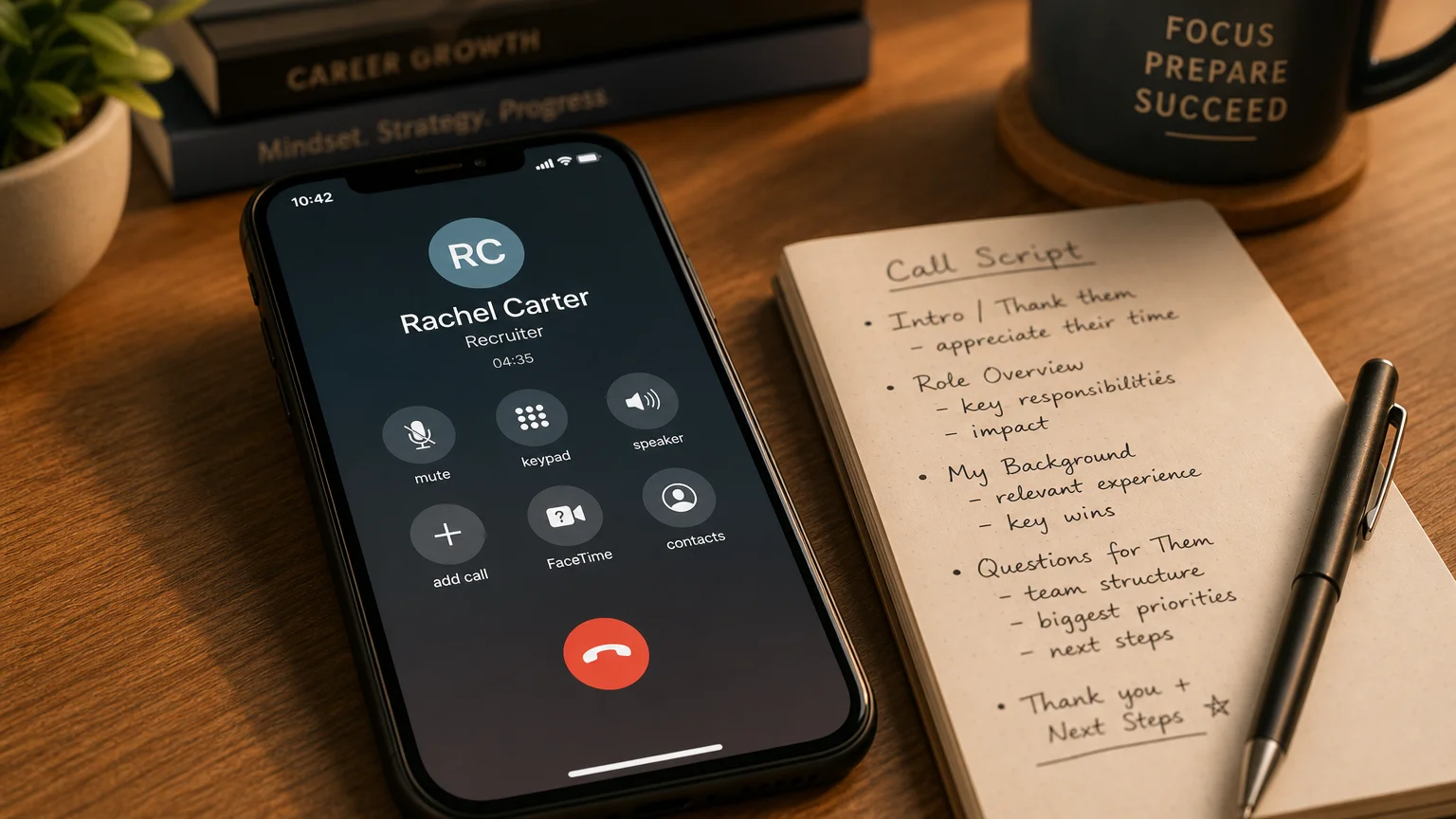
You got the offer. Now comes the part many people dread: talking about money.
If you do not ask, you may leave money on the table. In 2026, inflation, new pay rules for remote roles, and changing salary transparency laws all affect the conversation.
You can negotiate without sounding greedy or risking the offer. Start with a plan.
This guide walks through five steps, with scripts, data, and tactics for today’s market.
Step 1: Research Your Market Worth
You cannot negotiate effectively without knowing your number. Base it on facts, not feelings.
Use salary tools
Start with these free resources:
- Payscale: gives personalized reports based on your title, experience, and location.
- Glassdoor: shows salary ranges for specific companies and roles.
- Levels.fyi: is useful for tech roles, especially in engineering, product, or design.
Check at least three sources. If they align, you have a solid range.
Account for location, industry, and company size
A senior marketing manager in San Francisco may earn a different salary than someone in the same role in Austin. A startup may pay less than a FAANG. Adjust your research accordingly.
| Factor | Adjust down | Adjust up |
|---|---|---|
| Location | Lower cost-of-living area | High-cost city (NYC, SF, Seattle) |
| Industry | Non-profit, education | Tech, finance, consulting |
| Company size | Less than 50 employees | Enterprise or well-funded startup |
| Team size | Individual contributor | Manager or director |
Factor in remote-work compensation adjustments
Remote roles often have location-based pay bands. Some companies pay the same regardless of location; others adjust based on your residence.
If the company adjusts pay by location, ask which band it uses for your area. Some employers will tell you the midpoint, which you can use as a starting point.
Step 2: Prepare Your Negotiation Strategy
Once you know your market worth, decide which numbers you will use.
Decide your target, walk-away, and stretch
Before anything else, put three numbers on paper. They’re your anchors for the whole conversation.
- Walk-away number: The floor. Go below this and you’ll feel cheated, no matter what else they throw in.
- Target number: The win. This should sit near the top of what your skills command in the market right now.
- Stretch number: The long shot. Ask for it when everything lines up in your favor. You may not get it, but it pulls the whole negotiation upward.
Here’s how that might look for a product manager with 5 years under their belt:
- Walk-away: $110,000
- Target: $130,000
- Stretch: $145,000
Prioritize leverage points
Now figure out what’s working in your favor. Write down every factor that gives you bargaining power:
- Competing offers (nothing beats this)
- Unique skills or certifications
- Domain expertise the team doesn’t have
- A strong interview performance
- Industry relevance (say, you know a stack they lean on heavily)
Rank them, strongest first. When you make your case, lean on the top two and don’t muddy the message with the rest.
Prepare your script
Each channel changes how you negotiate, so build a version for each one.
| Channel | Best for | Watch out for |
|---|---|---|
| Initial counter, detailed asks | Can feel impersonal, so keep the tone warm | |
| Phone | Fast back-and-forth, gauging reaction | No paper trail, so follow up by email |
| In-person | Building rapport, final yes | Pressure can build, so rehearse out loud |
Step 3: Execute the Negotiation
Keep it calm and polite. Preparation only helps if you hold it together in the moment.
How to respond to a lowball offer
If their first number lands well below your target, don’t panic. Recruiters often lowball to see how you react.
Script for email:
Hi [Name],
Thank you again for the offer. I’m very excited about the role and believe I can contribute a lot to the team.
Based on my market research and the level of this position, I was expecting a base salary closer to [target number]. Is there flexibility in the compensation package to move toward that range?
I’d love to make this work for both of us. Happy to discuss further.
Best, [Your name]
How to negotiate when the recruiter says “non-negotiable”
Sometimes an offer really is fixed. Startups and public sector roles often can’t move. But other times, ""non-negotiable"" is a test to see if you’ll push back at all.
Try this: Ask about other elements. “I understand the base is firm – can we discuss a signing bonus, extra vacation days, or a performance-based raise after six months?”
Still hearing no? Then it’s your call: accept it, or walk.
Timing: When to ask for more time or a follow-up
Don’t answer on the spot. Give yourself 24 to 48 hours before responding. Something like: “I’d like a day to review the full package. I’ll get back to you by [date].”
Negotiating in stages works too. Just request a follow-up call: “I have a few questions about the offer. Do you have 15 minutes later this week?”
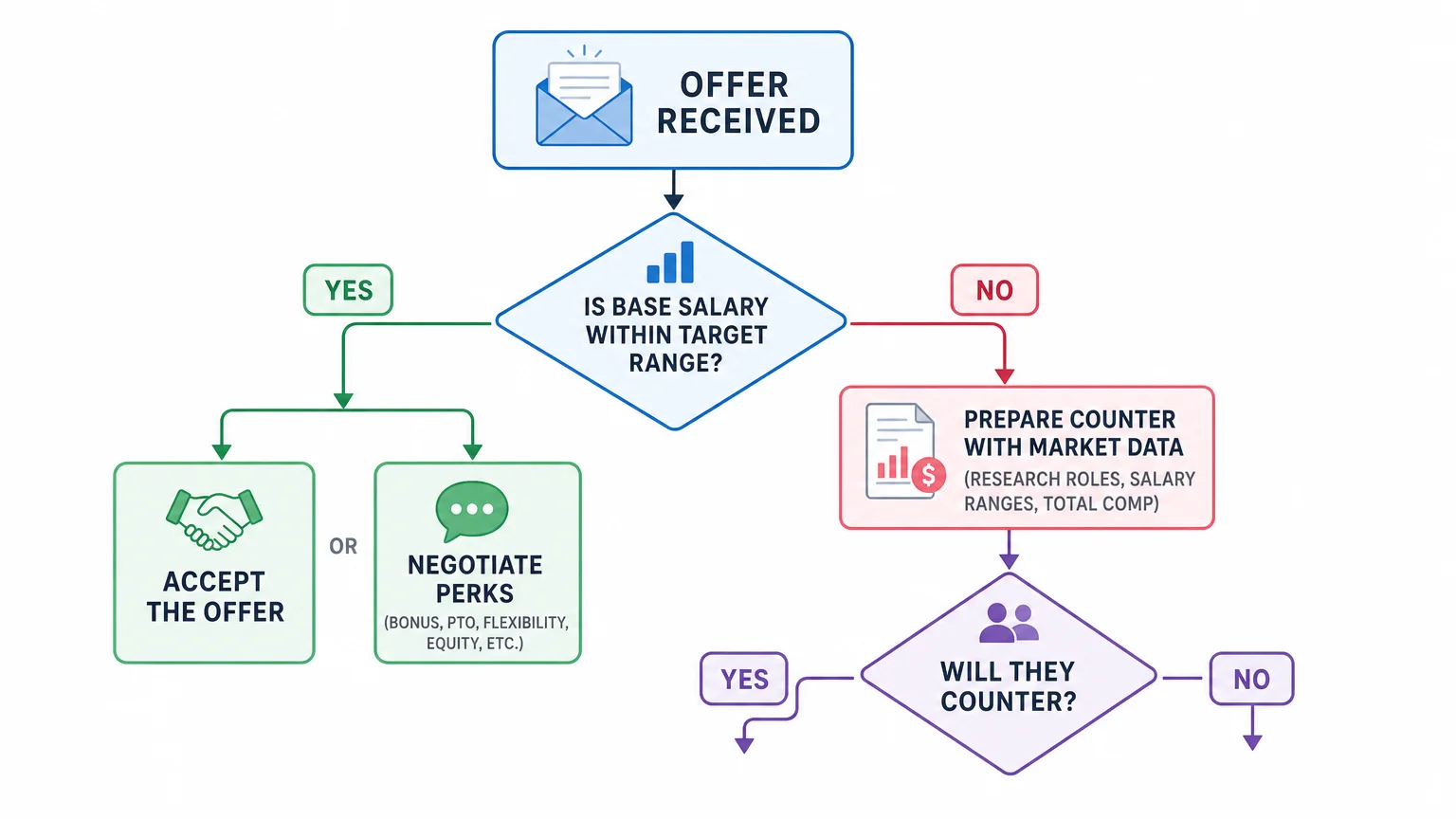
Step 4: Negotiate Beyond Base Salary
Base salary matters, sure. Total compensation matters more.
Bonus, equity, vacation, signing bonus, and relocation
| Component | How to negotiate |
|---|---|
| Annual bonus | Ask for a higher percentage or guaranteed minimum for first year |
| Equity/RSUs | Request additional shares or a shorter vesting schedule |
| Vacation | Ask for an extra week if you’re already experienced |
| Signing bonus | Especially negotiable if you have a competing offer |
| Relocation | Get a lump sum or reimbursement for moving expenses |
Figure out what actually matters to you first. If flexibility beats cash, push for remote days or flexible hours instead.
How to ask for a performance-based raise clause
Plenty of companies will review your salary after 6 months. That’s a decent middle ground when they can’t hit your number today.
Script:
“I understand that the budget for this role may be tight right now. Would you be open to agreeing in writing to a performance review at the 6-month mark with an opportunity to adjust my salary to market rate if I exceed expectations?”
If they agree, make sure it’s written into the offer letter.
Step 5: Handle Objections and Counteroffers
Recruiters negotiate all day long. Expect them to push back.
Common objections and how to respond
| Objection | Your response |
|---|---|
| “That’s our best offer.” | “I appreciate that. Is there any flexibility on benefits or equity?” |
| “We pay based on experience.” | “I agree experience matters. Based on my track record, here’s why I believe the higher range is justified…” |
| “We can’t afford that.” | “I understand. What about a signing bonus or performance bonus?” |
| “Other candidates accepted lower.” | “I respect that. I’m bringing [specific skill] that I believe adds unique value. Can we find middle ground?” |
When to accept, walk away, or re-approach
- Accept when the offer meets your target or lands close enough with strong benefits attached.
- Walk away if it sits below your walk-away point and nothing else closes the gap.
- Re-approach after 6 to 12 months if they couldn’t move now but seemed open.
Real-World Case Study: Patterns from Salary Negotiations
Research keeps showing the same thing: job seekers who negotiate with a structured approach tend to land noticeably better outcomes than those who skip it. The patterns are consistent.
- Asking for 10 to 15% above the initial offer usually settles at 5 to 10% above the original.
- Most successful negotiators also pick up at least one non-salary perk, like extra vacation or remote days.
- Competing offers push results up by 20% compared to negotiating without them.
Here’s the bottom line: preparation is the single best predictor of a successful negotiation. Know your number, have a script ready, and be prepared to talk about more than just base pay.
Key Takeaways and Checklist
Run through this before your next negotiation:
- Research market salary using Payscale, Glassdoor, and Levels.fyi
- Determine your walk-away, target, and stretch numbers
- List your top leverage points
- Write your negotiation script (email + phone version)
- Identify alternative compensation elements you’ll accept
- Decide your timeline for responding
One thing to avoid: accepting the first offer without asking whether there’s flexibility. Even a single question can shift the conversation.
FAQs About Salary Negotiation
1. How do I negotiate without sounding greedy?
Frame it as wanting fair compensation based on market data and what you bring. “I’m excited about this role, and I want to join on terms that reflect the contribution I’ll make.”
2. What if the offer expires in 24 hours?
That’s often a pressure tactic. Ask for 48 hours instead. If they hold firm, make your call quickly, but don’t accept less than you’re worth just because of the clock.
3. Can I negotiate after accepting?
Sometimes, but it carries more risk. If you find a major discrepancy after you’ve already signed, you can ask for a review at the 6-month mark. Just don’t back out of an accepted offer unless the reason is genuinely strong.
4. Can I negotiate remote work terms?
Yes, absolutely. If a written remote policy, home office budget, or flexible hours matter to you, ask for them.
5. What about a lowball offer from a startup with no cash?
Then shift the conversation to equity, early employee perks, and what happens to your salary once funding lands. Push for a bigger equity stake or a written commitment to a raise tied to the next round.
Getting an offer starts with a resume that actually gets read. Check out our ultimate resume guide for 2026, plus how to tailor yours to each job. From there, our interview prep guide picks up the process, and our AI resume writing guide covers the AI tools.
Want an easier way to tailor your resume? WorkHunt reads job descriptions and suggests targeted edits in seconds.

Yuvraj Bajwa
Editorial AuthorFounder, WorkHunt
Yuvraj Bajwa is the founder of WorkHunt, an AI job-search workspace built as part of Coffee Drop Studio. He writes and reviews the resume, cover letter, interview, and application-tracking guidance on this site, drawing on the day-to-day work of building the tailoring, fit analysis, and ATS tools the articles describe.
- Founder
- Product lead