How Long Should a Resume Be? 1 vs 2 Pages (2026)
Stop guessing resume length in 2026. See data from HR surveys and industry standards, plus the federal two-page rule, to choose 1 or 2 pages confidently.
By Yuvraj Bajwa, Founder, WorkHunt
July 12, 2026 · Updated August 7, 2026 · 7 min read
2026 Hiring GuideWorkHunt articles are written to help job seekers make better application decisions and are reviewed against our editorial policy.
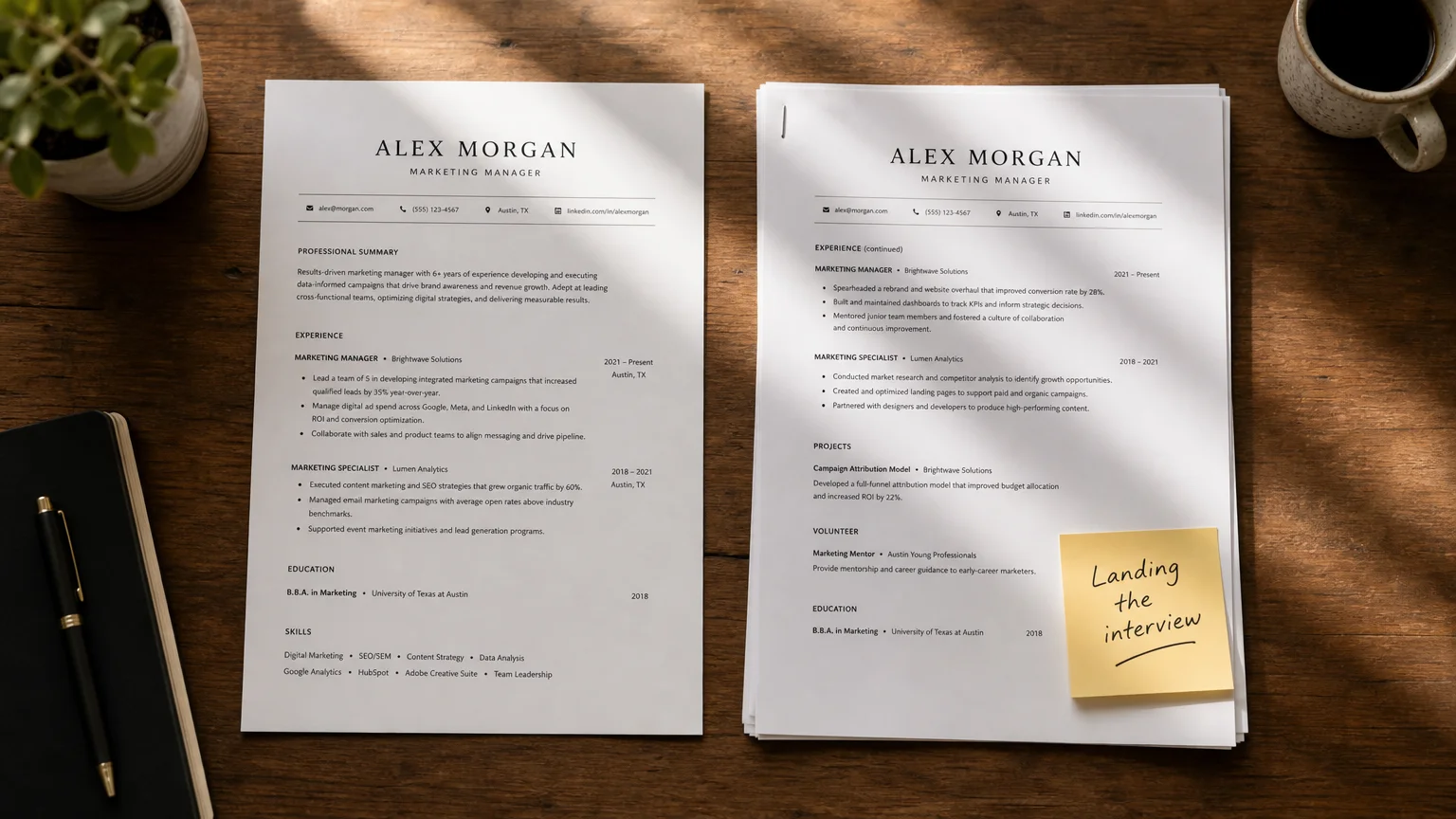
You’ve probably heard this advice many times: “Keep your resume to one page”. But following it blindly could cost you the interview.
Resume length isn’t a one-size-fits-all rule. It shifts with your experience level, your industry, and what you actually put on the pages.
To answer this for 2026, we pulled data from HR professionals, industry surveys, and government policies. By the end, you’ll have a concrete page range for your situation.
The Data: What Recruiters Actually Want (2025-2026)
Listen to what hiring professionals are saying.
A 2025 survey of 1,013 HR professionals found that 82.1% say the ideal resume length is 1-2 pages, with 51% specifically preferring two pages. Source: ResumeHog
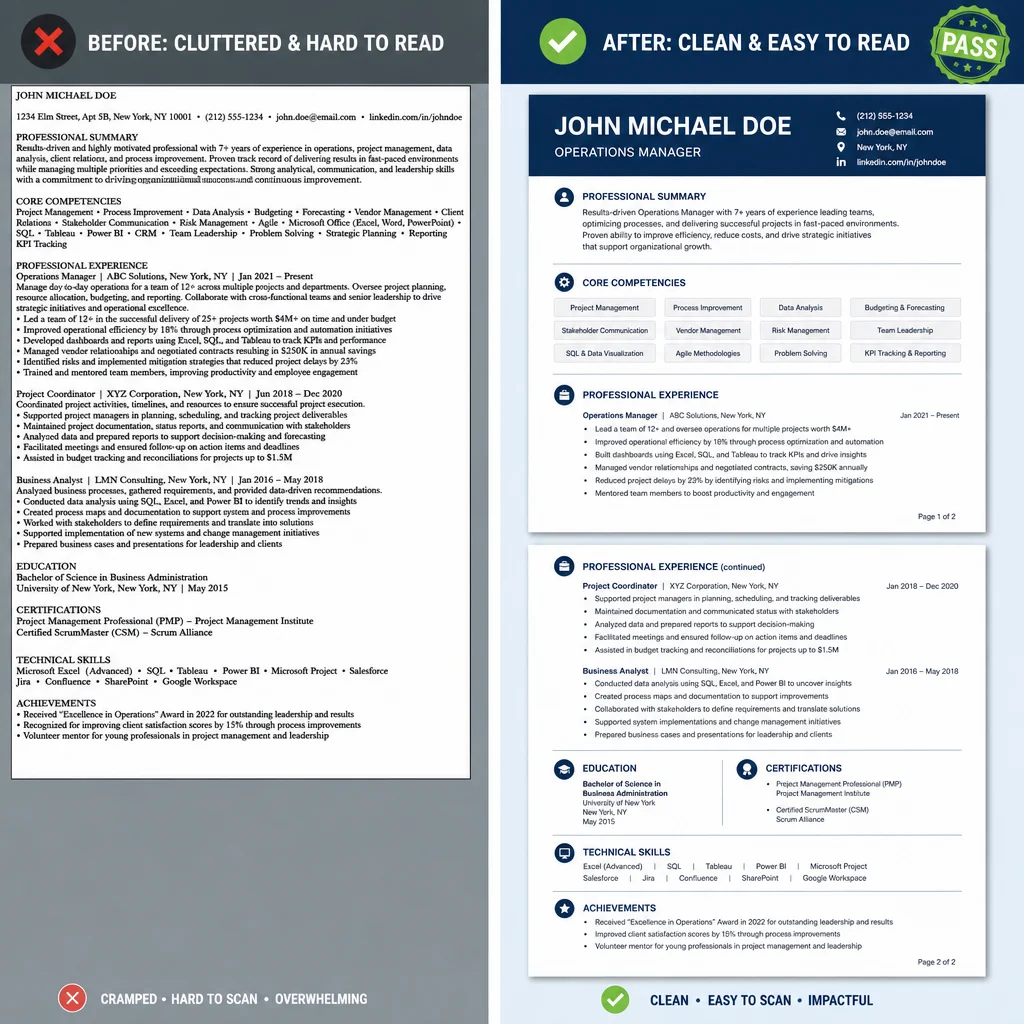
So more than half of recruiters lean toward two pages for the right candidates. But those pages have to earn their spot. Recruiters prefer two well-organized pages of highly relevant information over a cramped single page that’s difficult to read. Source: Indeed
Here’s the general rule:
- One page suits new graduates and those with under five years of experience.
- Two pages is now the standard for mid-level and senior candidates.
Want more on tailoring content? Check out our guide on writing a strong resume summary that hooks recruiters instantly.
By Experience Level: A Year-by-Year Guide
Entry-Level (< 5 years): Stick to 1 Page
Fresh out of school or early in your career? Keep it tight. One page. No exceptions.
Why? For entry-level candidates, a tight one-page resume outperforms a two-page version by 23% in callback rates.
Your word count target: 300-400 words for entry level.
Cut this: high school achievements, part-time jobs from five years ago that don’t matter anymore, generic coursework.
Mid-Career (5-15 years): 1-2 Pages is the Sweet Spot
You’ve got enough experience to fill two pages, and enough judgment to know what belongs on them.
One page feels cramped. Two pages works fine.
Target: 400-600 words for mid-level roles.
Here’s the litmus test: can you honestly say every bullet on page two is as strong as the ones on page one? If not, trim it back to one solid page.

Senior/Executive (15+ years): 2 Pages is Standard, 3 Pages for C-Suite
The one-page rule stops applying here.
Executives have a track record to prove, and one page can’t carry it.
Target: 600-800 words for senior roles, 800-1,200 words for executive positions.
Rule of thumb: if you’re a VP or C-suite candidate, two pages is the floor. Three pages works for board-level roles or when your leadership impact needs room to breathe across a long career.
Every achievement on those pages should follow an achievement-based bullet point structure to maximize impact.
By Industry: What Your Field Expects
Industry can outweigh experience level in some cases. Here’s the breakdown:
Tech: 1-2 Pages, Concise and Achievement-Focused
Tech recruiters skim fast. What they’re hunting for is impact, not a full career history.
- Entry-level tech: 1 page
- Mid-senior tech (engineers, PMs): 1-2 pages
- Tech executives: 2 pages
Lean on metrics and technical wins. Bullet points beat paragraphs every time.
Finance / Consulting: Strict 1 Page Preferred
The one-page rule still holds if you’re going after investment banks, consulting firms, or the big accounting shops.
Conciseness is the whole game in these industries. A two-page finance resume reads like you can’t prioritize.
Exception: managing director level roles can stretch to two pages.
Academia / Research: CV Format - 5-15+ Pages Expected
This flips everything above on its head.
In academia, publications, conference presentations, teaching experience, grants, and committee work all belong on the page.
A CV running 5-15+ pages is normal and expected. You’re showing scholarly output, not how well you can condense.
Federal / Government: 2 Pages Maximum (New Rule!)
Here’s something worth knowing.
Starting September 27, 2025, USAJOBS will cap all federal resumes at two pages max under new OPM guidelines.
Source: U.S. Office of Personnel Management
If the traditional 3-7 page federal format is what you’ve been using, adapt now. Federal recruiters are already being trained on the new limit.
For a full breakdown of the formatting rules that apply here, check out our guide on building an ATS-friendly resume format that won’t get filtered out.
Healthcare / Medical: 1-2 Pages for Clinical, Longer for Research
Clinical roles (nurses, physicians in practice): 1-2 pages. Keep certifications, clinical experience, and patient outcomes tight and specific.
Research or academic medical roles: follow the CV format above (5+ pages).
Special Cases: What to Do When Normal Rules Don’t Apply
Career Changers
Switching industries means your past experience counts, but not all of it earns a spot on the resume.
Keep it to 1 page. Lead with transferable skills and results. Anything that doesn’t push your new direction forward gets cut.
Military-to-Civilian Transition
Military folks tend to pack their resumes with dense, action-heavy language. Civilian hiring managers, though, can get lost in the jargon.
Shoot for 1-2 pages. Tighten the wording. Swap military terms for civilian ones, and open with a professional summary that frames your background clearly.
Freelancers and Consultants
Worked for dozens of clients? Listing them all isn’t required.
No. A 2-3 page resume works fine when you’re selective. Group clients by the type of work you did, showcase your strongest results, and leave the rest out. Every single contract doesn’t need to appear.
Quality Over Quantity: How to Cut or Expand Without Losing Impact
When you need to trim it down:
- Drop any bullet that starts with “Responsible for”, since that usually signals a weak achievement.
- Anything older than 10-15 years goes, unless it’s directly relevant.
- Hobbies and interests get deleted (unless they tie straight into the job).
- Remove the “References available upon request” line. Everyone already knows.
When you need to build it out:
- Add more metrics and results. So “Increased revenue” becomes “Grew revenue by 34% year-over-year for three consecutive quarters”.
- Add a “Key Achievements” section under each role.
- Include relevant certifications, awards, and professional development.
The right resume keywords for your industry can guide which achievements stay and which get cut.
ATS Considerations: How Resume Length Affects Applicant Tracking Systems
A common worry is: “Won’t a two-page resume break in the ATS?”
Most modern ATS systems handle two-page resumes just fine. Formatting is what matters.
Keep it simple:
- Don’t put critical information in headers or footers. ATS often reads footers as the end of the file.
- Skip tables and columns in the resume body. ATS reads them as a jumbled mess.
- Stick with standard fonts like Arial, Calibri, or Times New Roman.
- Save as PDF unless the job ad explicitly asks for Word.
A two-page resume with clean formatting passes ATS checks just fine. A cramped one-pager that drops relevant keywords won’t help you.
The Decision Framework: Your Step-by-Step Guide
Still unsure? Work through these questions.
-
How many years of professional experience do you have?
- Under 5 years → 1 page
- 5-15 years → 1-2 pages
- 15+ years → 2 pages
- C-suite or board level → 2-3 pages
-
What industry are you in?
- Finance, consulting, law firm → 1 page
- Tech → 1-2 pages
- Academia or research → 5-15+ pages (CV)
- Federal government → Cap it at 2 pages
- Healthcare (clinical) → 1-2 pages
- Everything else → Use the experience-level guide above
-
Can you honestly say every line on page two is as strong as the lines on page one?
- Yes → Keep two pages
- No → Cut to one page
-
Will a two-page version make the resume hard to read?
- You’re using 10pt font or smaller → Go to one page
- Margins under 0.5 inches → Go to one page
- No white space between sections → Go to one page
The bottom line: Most resumes should be one strong page or two strong pages. The right choice depends on your experience and the role.
If your resume is concise, achievement-focused, and tailored to the role, its length matters less.
Adjust your resume length to fit your experience and the role.
Did this guide help you decide? Share it with someone who’s updating their resume right now.

Yuvraj Bajwa
Editorial AuthorFounder, WorkHunt
Yuvraj Bajwa is the founder of WorkHunt, an AI job-search workspace built as part of Coffee Drop Studio. He writes and reviews the resume, cover letter, interview, and application-tracking guidance on this site, drawing on the day-to-day work of building the tailoring, fit analysis, and ATS tools the articles describe.
- Founder
- Product lead