Use a Job Posting to Predict Interview Questions
Stop prepping blind in 2026. Decode any job description to predict interview questions, map your experience, and craft STAR stories employers want to hear.
By Yuvraj Bajwa, Founder, Resumae
August 10, 2026 · 9 min read
Resumae articles are written to help job seekers make better application decisions and are reviewed against our editorial policy.
Last updated: August 10, 2026
You’ve got the interview. Congrats. Now what?
Skim your resume, Google the company for 10 minutes, and wing it, that’s how most job seekers handle this moment. It’s a mistake.
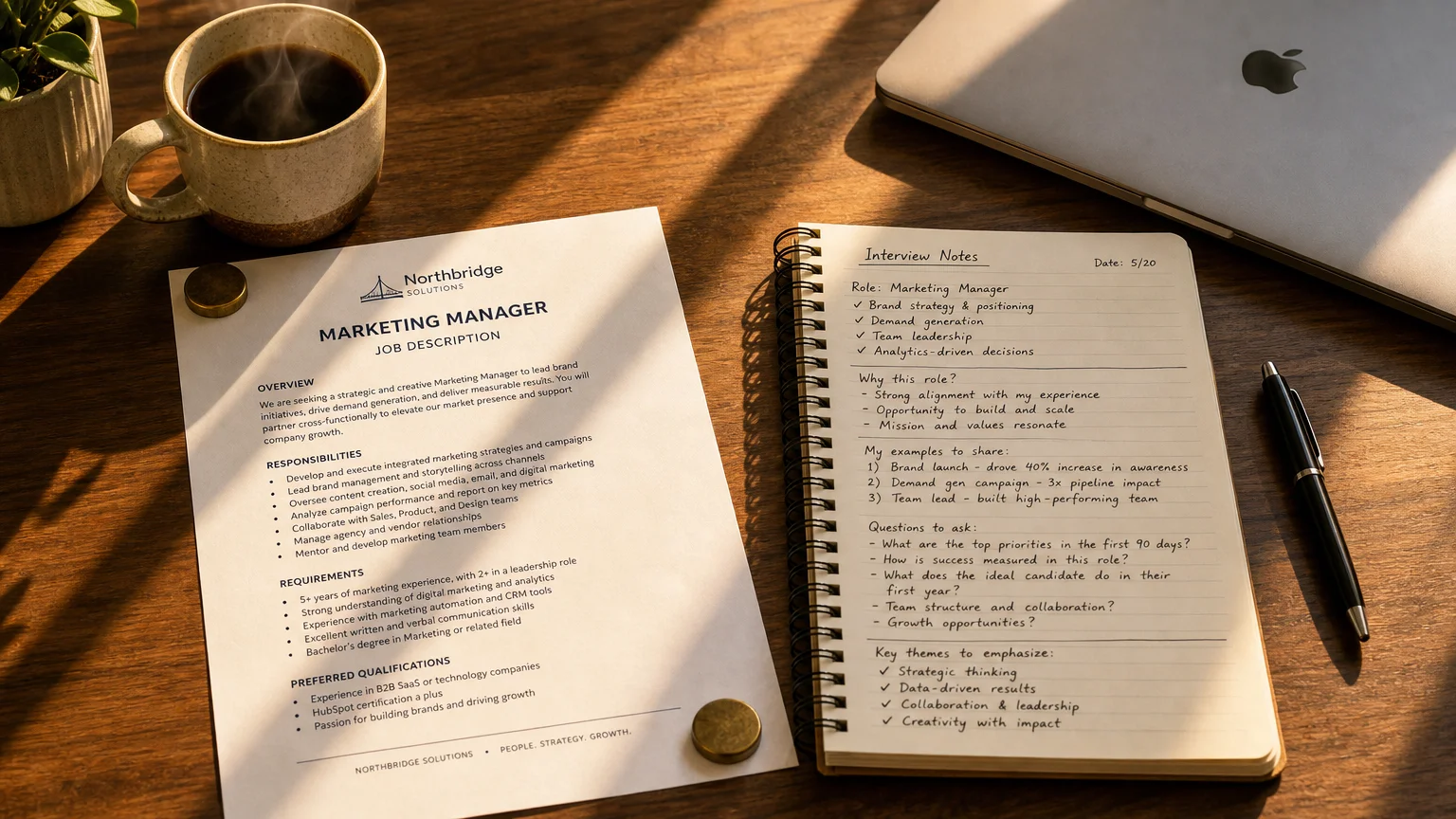
The job posting you probably stopped reading the moment you hit “Apply.” is actually your most powerful interview prep tool. No expensive course or recruiter friend can match it.
Here’s the truth: that posting is a roadmap. Exactly what the employer values, what questions they’ll likely ask, and how you should frame your answers. It all sits in that text. You just need to know how to read it.
Let’s dig in.
Why the Job Posting is Your Secret Weapon
Most candidates use the job description to land the interview, then ignore it. That’s backwards.
Career experts call the job description the most underutilized tool in interview preparation. You use it to get in the door but stop using it once the interview is scheduled, precisely when you need it most.
A job posting is more than a list of duties. It’s a window into what the employer cares about most: the skills they list, the responsibilities they emphasize, the keywords they repeat. All that tells you what they’ll ask about. As Indeed notes, the job description gives you the “qualifications, qualities, and background” the employer wants, and using it as your guide means walking in knowing exactly what they’re looking for.
Ignore it, and you’re guessing, which is how you bomb interviews.
Step 1: Read the Posting Like a Detective
Analyzing the posting, not just reading it, is your first task. That takes a few careful passes.
Pass 1: Separate must-haves from nice-to-haves.
Look for language like “required”, “must have”, or “essential”. Those are non-negotiables. Then find phrases like “preferred”, “nice to have”, or “bonus”, differentiators.
Why it matters: Prioritize the must-haves in your interview answers. Nail those first. The nice-to-haves let you stand out, but only once the essentials are covered.
Pass 2: Spot repeated keywords.
Employers often repeat terms for a reason. Five mentions of “project management” in a posting? Top priority. Repeated appearances of “collaboration” signal teamwork as core to the role. List these repeated keywords, they’re your cheat sheet for what to emphasize.
Pass 3: Highlight the responsibilities.
Read the posting in detail again, focusing on the role’s duties. Your goal is to prove your past experience matches what they’re asking for.
Step 2: Predict Interview Questions from Each Requirement
Here’s where it gets fun. Each requirement in the posting is a potential interview question. Think about it: if it says “experience managing budgets”, you will likely hear, ""Tell me about a time you managed a budget”.” If it mentions “strong written communication”, expect a question about a time you wrote something important. The University of Minnesota’s career services team confirms this approach. Analyzing a job description can reveal clues about the interview questions you’ll likely encounter, since postings reflect what an employer values most.
Break down a sample posting:
| Job Posting Says | Likely Interview Question |
|---|---|
| ”5+ years of experience in sales" | "Tell me about your sales experience. What’s your biggest win?" |
| "Strong analytical skills" | "Walk me through a time you used data to make a decision." |
| "Ability to work in a fast-paced environment" | "How do you handle multiple priorities under tight deadlines?" |
| "Experience with Salesforce" | "How do you use Salesforce in your current role?” |
Get the idea? You can script your practice session from the posting alone.
Step 3: Map Your Experience with Concrete Examples
Connect the dots now. For each requirement in the posting, find a specific example from your background.
Going through every requirement in the job posting and writing a specific, matching example for each is what separates top candidates from the rest. That process is the real core of effective interview preparation.
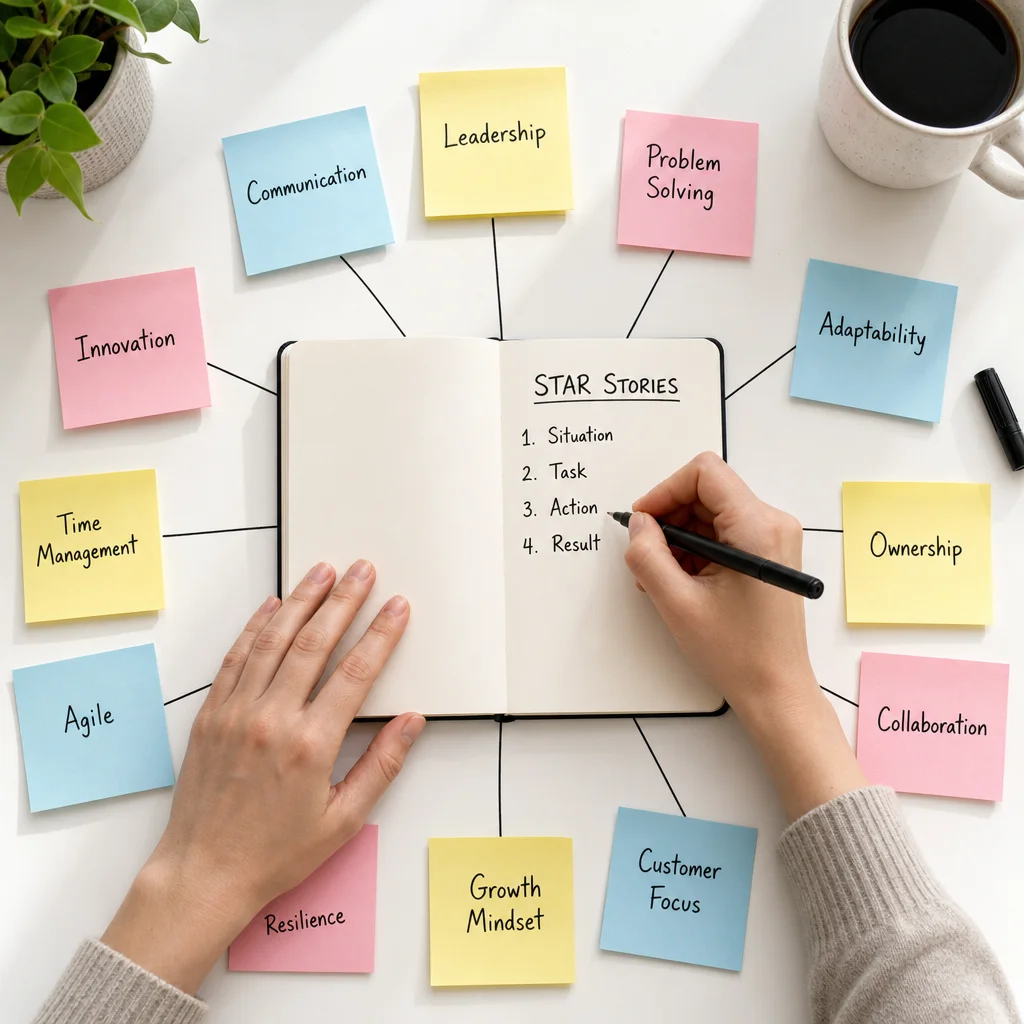
The STAR method is the best tool for this.
- Situation: Set the scene. What was the context?
- Task: What were you responsible for?
- Action: What steps did you take, specifically?
- Result: What happened? Use metrics if you can.
Suppose the posting requires “experience leading cross-functional teams”. Your STAR story could look like this:
- Situation: A new product launch had engineering, marketing, and sales all on different pages.
- Task: I was asked to lead the launch coordination across all three departments.
- Action: I set up weekly sync meetings, created a shared project tracker, and established clear communication channels between the teams.
- Result: We launched on time, hit our sales target in the first month, and the process became a template for future launches.
See what a before-and-after can show:
- Before: “I’ve led projects before and I’m good at working with people.”
- After: “The posting emphasizes leading cross-functional teams. In my last role, I led a product launch that required daily coordination among engineering, marketing, and sales. We shipped on time and beat our adoption target.”
Specific. Concrete. Metric-driven. That’s what wins.
Step 4: Research the Company and Role Context
You already get the “what.” from the posting itself. But you also need the “who” and the “why”.
Research the company beyond the surface level before every interview. Look at recent news and press releases, their products or services, their culture and values, who’s on the leadership team, and what other employees say on sites like Glassdoor.
More importantly, figure out how this role fits into the bigger picture. For a marketing position, understand the company’s biggest marketing challenges. For a tech role, know what platforms they use.
Careers.Illinois.gov reinforces this: reviewing the job posting beforehand helps you highlight the most relevant experiences. But it also helps you ask smarter questions, which leads us to Step 5.
Step 5: Prepare Questions to Ask Based on the Posting’s Gaps
Not just answering during the interview. You’re evaluating them too. From the job posting, you get a map for what to ask about.
Find what’s unclear in the posting. What would you need to know before you’d accept an offer?
You might ask:
- “The posting mentions [responsibility]. How does the team currently approach that?”
- “What does success look like in this role in the first 90 days?”
- “The posting lists [skill] as a requirement. What level of experience does the team ideally need?”
- “What are the biggest challenges the person in this role will face?”
These demonstrate careful reading of the posting and deep thought about the role. That makes you memorable. And it’s rare.

Common Mistakes to Avoid When Prepping from a Posting
Even a great method has pitfalls. Avoid these:
1. Ignoring the “nice-to-haves.”
You don’t need a perfect match for every preferred qualification. Skipping them entirely though is the mistake. Prepare a story for a nice-to-have where you have even partial experience. That story might tip the scales over a candidate with identical core skills.
2. Generic examples.
No one-size-fits-all STAR stories work here. Tailor each story to the posting’s specific requirement. For a role needing “collaboration with remote teams”, your “teamwork” story should differ from one requiring “cross-departmental coordination”.
3. Memorizing instead of understanding.
Scripting answers word-for-word will make you sound robotic. Understand your stories deeply so you can tell them naturally, shifting the emphasis based on what the interviewer asks.
4. Assuming the posting predicts every question.
A job description doesn’t predict exact questions. It points toward themes. Treat it like a roadmap, not a script. Employers will still throw curveballs. Use the posting to build your core narratives, and stay ready to adapt.
5. Ignoring the posting until the night before.
Good prep takes time, so spread it across several days. Read the posting. Write your stories. Review them. Practice out loud. Cramming won’t work for interviews.
A Quick Checklist Before Every Interview
Run through this before you walk in:
- I’ve read the job posting three times: once for must-haves, once for keywords, once for responsibilities
- I’ve predicted at least 5 likely interview questions based on the posting
- I have a specific STAR story for each of the top 5 requirements
- I can explain how my experience matches the must-haves in under 30 seconds
- I’ve researched the company’s recent news and may understand how this role fits in
- I have 3-5 questions to ask, based on gaps in the posting
- I’ve practiced my stories out loud at least once
Copy this checklist into a notepad, Google Doc, or your phone before interview day. It keeps your preparation honest and focused.
Frequently Asked Questions
How can I predict interview questions from a job posting?
Read the posting for repeated keywords and hard requirements. Turn each one into a question, like “Tell me about a time you managed a budget.” Then build a STAR story showing you have that exact experience. That simple mapping turns the posting into a practice script.
What is the STAR method for interview answers?
STAR is Situation, Task, Action, and Result. Describe the context and your responsibility first. After that, explain the specific actions you took. End with a measurable result, a percentage gain or an on-time launch. This structure keeps answers focused and proves you can handle the job.
How should I handle job requirements I don’t fully meet?
Be honest and redirect to what you’re skilled in. If a job posting mentions a tool you’ve never used, pair that missing skill with a related strength or lay out a learning plan. Mention your past work with similar tools and your ability to ramp up quickly. Focus on transferable skills.
Should I memorize my interview answers?
Avoid word-for-word memorization. Robotic answers hurt your credibility. Instead, memorize just the structure of each STAR story plus the key metrics or outcomes you want to hit. Practice out loud until it feels natural, then you’ll be ready to adapt when the interviewer asks a follow-up question.
How early should I start preparing for an interview?
Start as soon as you schedule the interview, ideally four to seven days out. Spend the first day analyzing the posting, the next two days writing STAR stories, and the final days practicing out loud. Spreading preparation across days helps improve retention and reduce interview-day stress.
You’re Ready
Here’s the thing: most candidates don’t do this work. They show up, they guess, they hope.
You’ll be different. You’ll anticipate their questions and have answers ready. You’ll ask insightful questions that prove you’ve done your homework.
That kind of confidence doesn’t come from a pep talk. It comes from thorough preparation.
So download that saved job posting. Read it like a detective. Map your experience. Craft your stories. Practice.
When you walk into that interview, you’ll be the candidate who clearly gets it.
Key takeaways:
- The job posting is your roadmap. It reveals what the employer values and what they’ll ask about.
- Predict questions by translating each requirement into likely queries. Then prepare STAR stories for each one.
- Use the gaps in the posting to craft smart questions for the interviewer.
You’ve got this. Now go nail that interview.

About the author
Yuvraj Bajwa
Founder, Resumae
Yuvraj Bajwa is the founder of Resumae, an AI job-search workspace built as part of Coffee Drop Studio. He writes and reviews the resume, cover letter, interview, and application-tracking guidance on this site, drawing on the day-to-day work of building the tailoring, fit analysis, and ATS tools the articles describe.
- Founder
- Product lead
Related reading
How to Use a Job Posting to Prep for Your Interview
Use a job posting to prep for interviews in 2026: extract keywords, build STAR stories, and craft smart questions directly from the job description.
Job Tracker Features That Actually Save Your Search 2026
Discover job tracker features that matter in 2026: follow-up automation, visual pipelines, interview tracking, and analytics to cut missed opportunities.
How Long Should a Resume Be? 1 vs 2 Pages (2026)
Stop guessing resume length in 2026. See data from HR surveys and industry standards, plus the federal two-page rule, to choose 1 or 2 pages confidently.
Next step
Ready to build a resume that gets noticed?
Paste a job description and let AI tailor your resume - free plan, no credit card required.