Can ChatGPT Write Your Resume? What to Know in 2026
Can ChatGPT write your resume safely in 2026? Learn what AI does well, where it fails, and how to use it strategically without getting flagged by ATS.
By Yuvraj Bajwa, Founder, WorkHunt
July 12, 2026 · Updated August 7, 2026 · 6 min read
2026 Hiring GuideWorkHunt articles are written to help job seekers make better application decisions and are reviewed against our editorial policy.
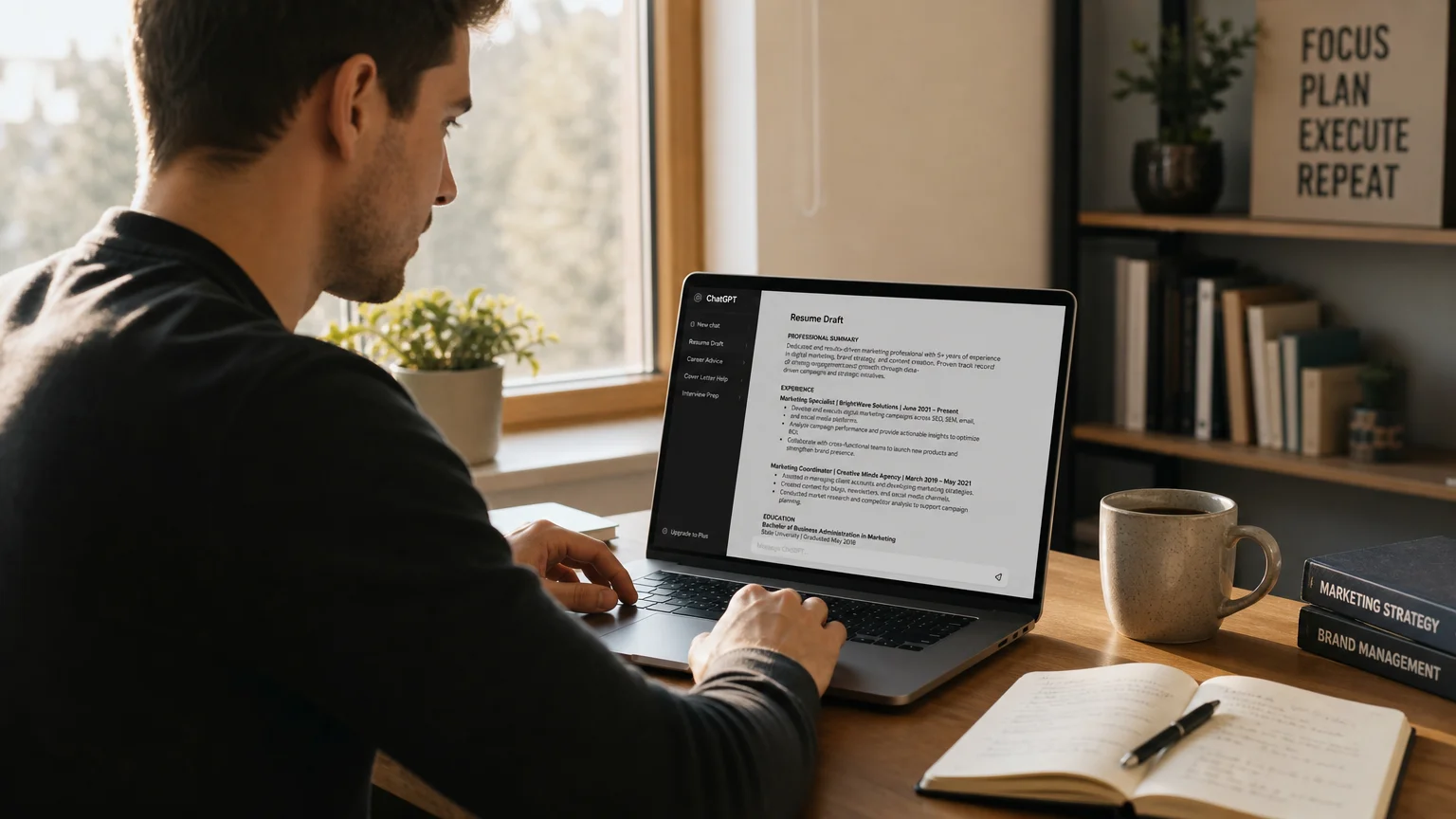
Much of the resume advice floating around is flat-out wrong. ChatGPT can knock out a decent draft in about 30 seconds. By 2025, nearly 65-70% of job seekers were already leaning on tools like it for applications.
Recruiters, though? They can spot an AI-written resume in under 20 seconds. And 62% of flagged resumes get rejected.
So can ChatGPT write your resume?
Yes, but not alone.
Treat it as a drafting assistant, not a stand-in for your experience or your voice. The sections below walk through how to use it without tripping the flags.
What ChatGPT Does Really Well
ChatGPT shines in a few parts of the resume-writing process.
Keyword optimization. Feed it a job description and it pulls out the keywords, skills, and phrases ATS systems hunt for. Source
Overcoming writer’s block. Blank page staring back at you? ChatGPT hands you a rough draft to edit and make your own. Source
Tailoring to job descriptions. Rather than rewriting your whole resume for each application, paste the job description in and ask for suggested tweaks. Source
Formatting suggestions. It can recommend section order, bullet structure, and action verbs for your experience.
ChatGPT is a generalist. It has no idea about your specific wins, like that time you saved your team 30 hours a week or led a project that pushed revenue up by 40%.
And that’s where things get dangerous.
Where ChatGPT Falls Short (And It’s a Big Gap)
The same features that make ChatGPT helpful also make it risky. Here are the main problems.
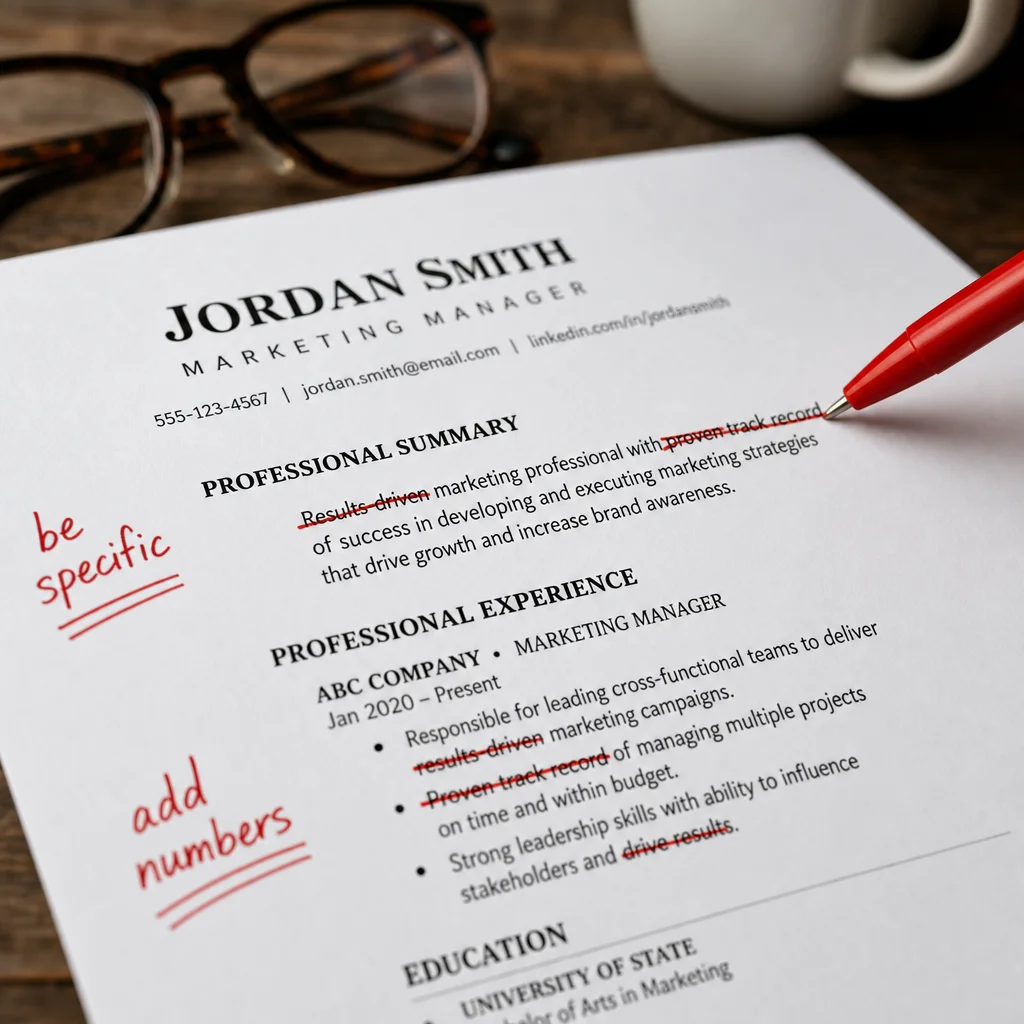
Generic language. ChatGPT’s default output reads like a LinkedIn profile drafted by a polite robot. It leans on the same tired phrases everyone reaches for: “results-driven professional,” “proven track record,” “team player.” Recruiters have seen these a thousand times. They skip right past them. Source
Hallucinated facts. Here’s the big one. ChatGPT invents things, job titles, dates, credentials, accomplishments that never happened. It might tack on a degree you don’t have or claim you led a project you never touched. Skip fact-checking and you could end up with a resume full of lies, then lose an offer when they verify. Source | Source
Lack of personal voice. Your resume is yours. It should sound like you, not like a template. ChatGPT turns out clean, correct, boring text, no personality, no sense of how you actually tackled problems. Source
Poor quantification of achievements. Weak: “Improved efficiency”. Strong: “Reduced processing time by 35% across 3 departments”. ChatGPT falls back on vague claims because it doesn’t have your real numbers. Source
Outdated or incorrect formatting advice. Resume formatting shifts with the times, and ChatGPT’s training data lags behind. A format that worked in 2021 might look dated now, or get rejected by modern ATS systems entirely. Source
Can Recruiters Tell? Yes. Here’s How.
Recruiters and hiring managers can clock an AI-written resume in under 20 seconds. Source | Source
These patterns give it away.
Overused buzzwords. Phrases like “leveraged,” “streamlined,” “synergize,” “driven,” “dynamic,” and “proven track record” are red flags. They’re generic and tell a recruiter you didn’t put in the work. Source
Unnatural sentence rhythm. ChatGPT writes in a predictable pattern. Sentences are all about the same length. They all start the same way. They lack the natural variation of human writing. Experienced recruiters notice this instantly. Source
Lack of specificity. The biggest tell? A resume that sounds good but has no real numbers, no concrete examples, no unique details. It’s like a movie trailer that shows you everything except the actual plot. Source
Perfect formatting. Ironically, a resume that’s too clean can also be a red flag. Real people make small formatting choices. AI doesn’t.
ATS and AI Detection Tools: What’s Happening Behind the Scenes
Applicant tracking systems and dedicated AI detection tools are increasingly being used by employers to screen for AI-generated resumes. Source | Source
Here’s what that looks like in practice.
Some ATS platforms now flag resumes that match known AI writing patterns. Third-party detectors like GPTZero and Originality.ai are being integrated into hiring workflows. Source
The reality: Detection accuracy varies. Some tools are good and some are terrible. Employers are trying to identify AI-written content, and they’re getting better at it every quarter.
The 62% rejection rate for flagged resumes is worth pausing over. Source
How to Use ChatGPT Strategically (Without Getting Flagged)
Treat ChatGPT as a drafting and optimization assistant, not the final word on your copy. Source | Source
Step 1: Draft your own content first. Write your bullet points, your numbers, your specific achievements. Don’t hand the core thinking to AI.
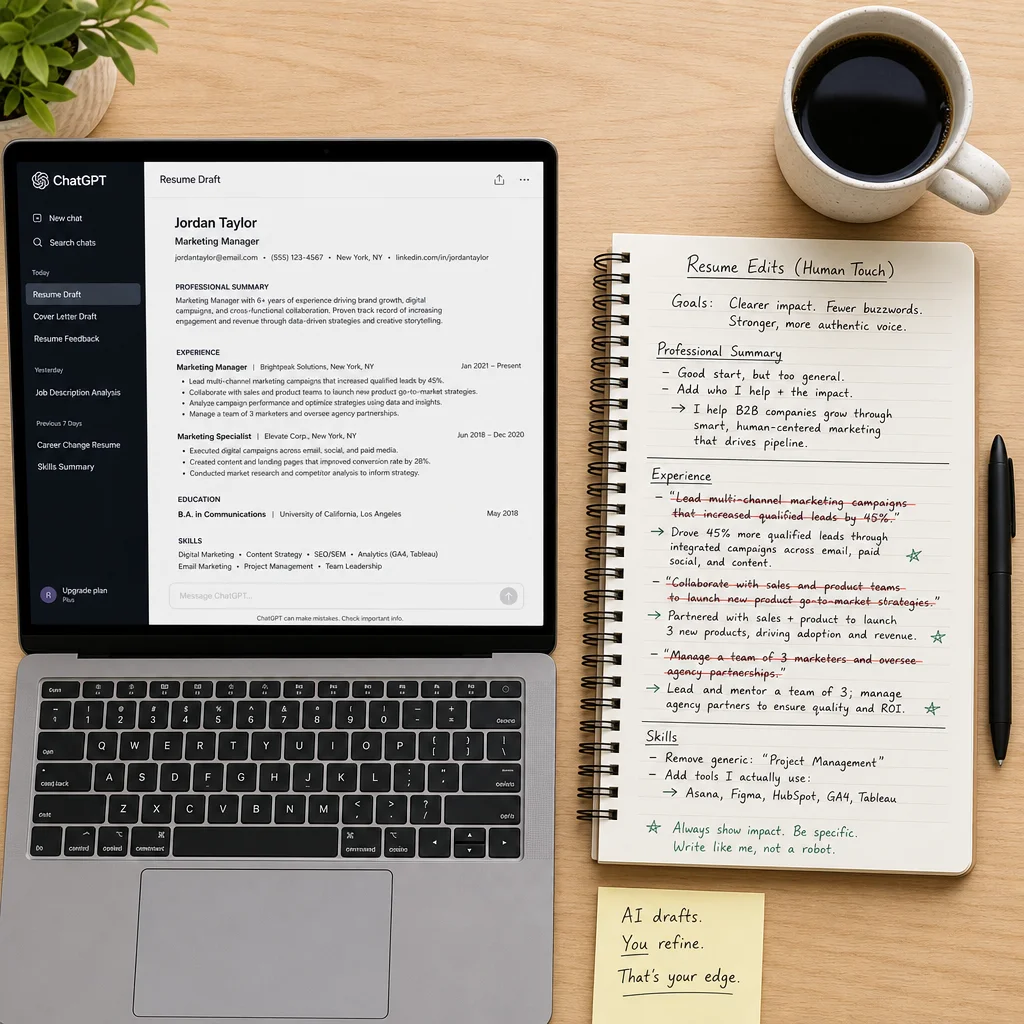
Step 2: Use ChatGPT for optimization. Paste your draft in and ask for suggestions. “Make this more concise.” “Suggest stronger action verbs.” “Check if these keywords match the job description.”
Step 3: Personalize everything you keep. Each line should sound like you. If ChatGPT rewrote a bullet point, read it aloud. Would you actually say that? If not, rewrite it.
Step 4: Fact-check every claim. Did ChatGPT add a certification you don’t hold? A title you never had? A wrong date? Fix it. Verification isn’t optional. Source
Step 5: Add your voice back in. Your resume should carry your tone. Informal? Let it show. Precise and direct? That works too. The goal is being unmistakably you.
The Verdict: ChatGPT Is a Co-Pilot, Not the Pilot
Can ChatGPT write your resume?
Yes, if you want a generic, easy-to-spot, potentially factually wrong document that recruiters will reject 62% of the time.
No, if you want a resume that actually gets you interviews.
Used as a drafting assistant, an optimization tool, and a starting point, ChatGPT can save time, catch blind spots, and speed up tailoring.
The final product must be yours. It needs your voice, your specific achievements, and your story.
AI is fine for getting unstuck, polishing a draft, or tightening wording. It’s not a substitute for the experience and judgment that make you a candidate.
Key takeaways:
- ChatGPT drafts; you own the result. Edit and personalize heavily before it goes anywhere.
- Recruiters can spot AI resumes in under 20 seconds. Generic language and a lack of specifics are dead giveaways.
- Fact-check everything. ChatGPT hallucinates job titles, dates, and credentials.
- Use AI to refine, not to invent. Let it help you improve what you’ve already written.
- 62% of flagged AI resumes get rejected. Make every word unmistakably yours.
So take ChatGPT’s draft and add your real numbers, stories, and voice.
Write a resume that sounds like the person who will show up to the interview.
Found this helpful? Share it with your network on LinkedIn, Twitter, or Facebook. For more career resources, visit our blog for guides on job search strategies and AI in hiring.

Yuvraj Bajwa
Editorial AuthorFounder, WorkHunt
Yuvraj Bajwa is the founder of WorkHunt, an AI job-search workspace built as part of Coffee Drop Studio. He writes and reviews the resume, cover letter, interview, and application-tracking guidance on this site, drawing on the day-to-day work of building the tailoring, fit analysis, and ATS tools the articles describe.
- Founder
- Product lead